17 June 2019
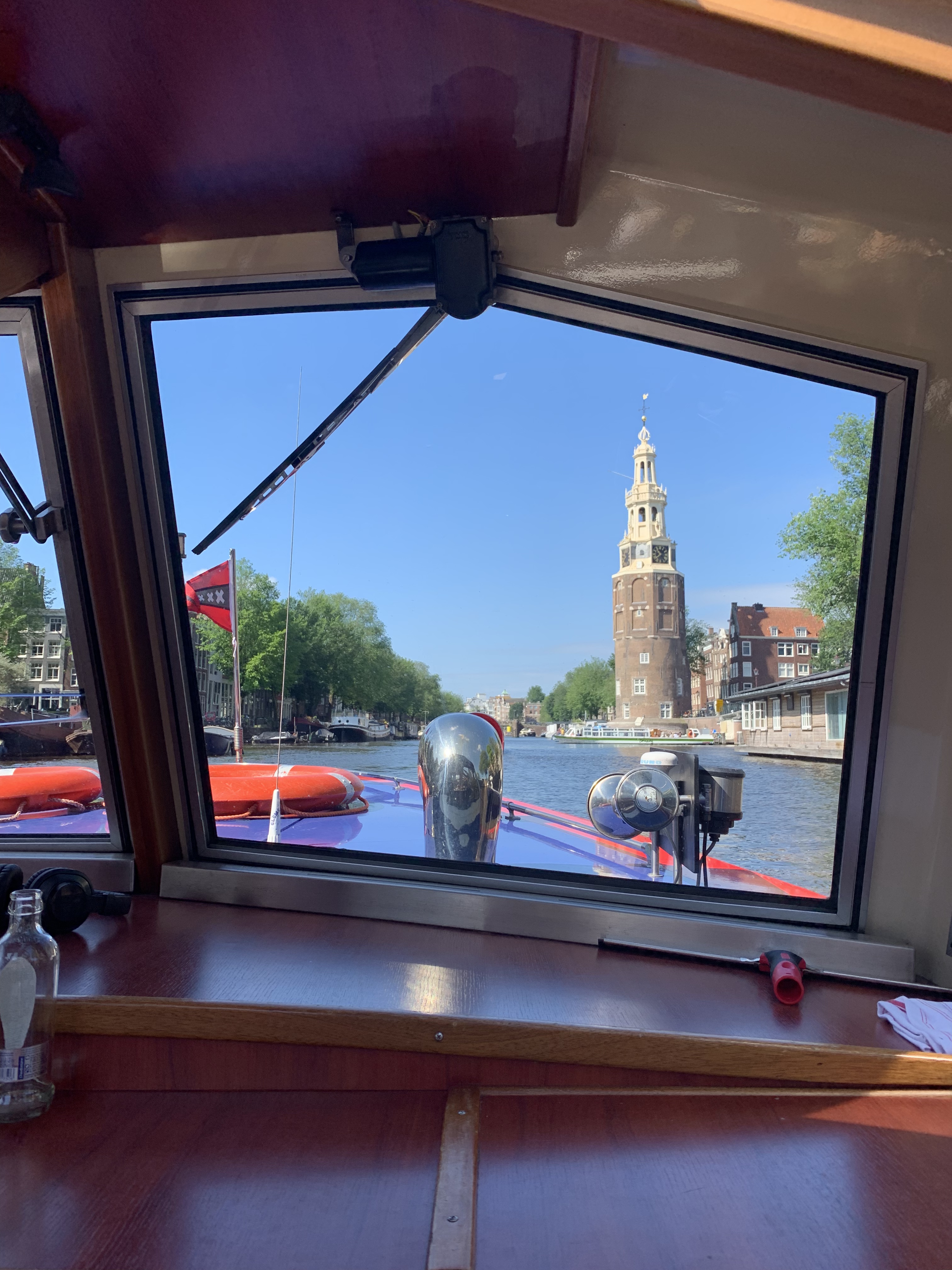
Each morning, we wake up and come to our hotel’s lobby, excited for the day ahead of us. Early Monday morning is our first full day in Amsterdam, starting with a walk over to the canal, passing the beautiful Vondelpark. All 26 of us pile into the tour boat and find our seats, figuring out which spot would hold our greatest vantage point of the city.
I pick a spot in the covered portion of the boat because they offer headsets to listen to the history of Amsterdam as we pass through each landmark and historical fact. The first thing I notice is the audio cassette offers 21 different language options. The 21st language is called, “Freshwater Pirate Language,” so naturally, many of us decided to listen to what the pirate had to say about the rich history of Amsterdam. This station lived a short life as it was made for children, and we only learned that Amsterdam was a trading port and “pirate” ships would leave for weeks and return with spices, ivory, sugar, and other valuable cargo. This was occurring during the ‘Golden Century’ (arrg). Though this is important information, we decided to switch over to the American English channel.
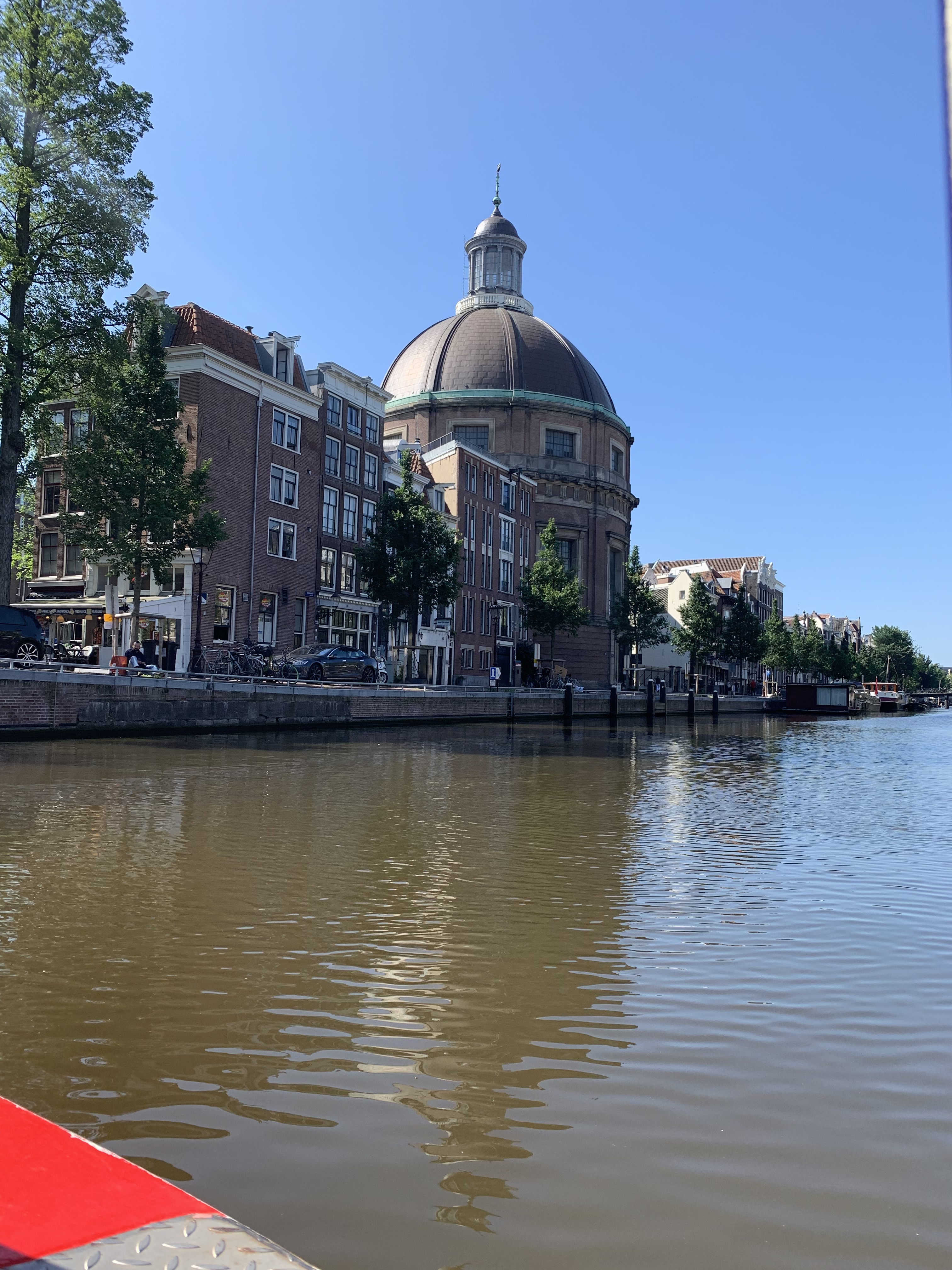
One of the most visual memories of Amsterdam are the unique houses lined up on the canal. These houses are over 300 years old, and have looked the same since. The houses are all painted different colors and styles because this is how the city folk showed their riches to their neighbors. The skinniest house one can buy is 1.4 meters across, and you would only have to pay for the width of the house. Knowing this, many people build up as high as they’d like. Because of the smaller spaces, half of the residents in Amsterdam live alone, and only 15% of the households have kids.
Of course, this is not the only housing option. Many decide to live on boat houses! There are over 3,000 house boats in Amsterdam, varying from the standard house boat, to steel, arcs, and wooden styles. These can be used for homes, businesses, gardens, animal shelters, and more. These came into style after World War II when there was a housing shortage. The Amsterdam city government, however, is not selling any more house boats, so if folk want to purchase one, they’d have to go directly to the owner, leaving the owner plenty of room to sell as high as she’d like.
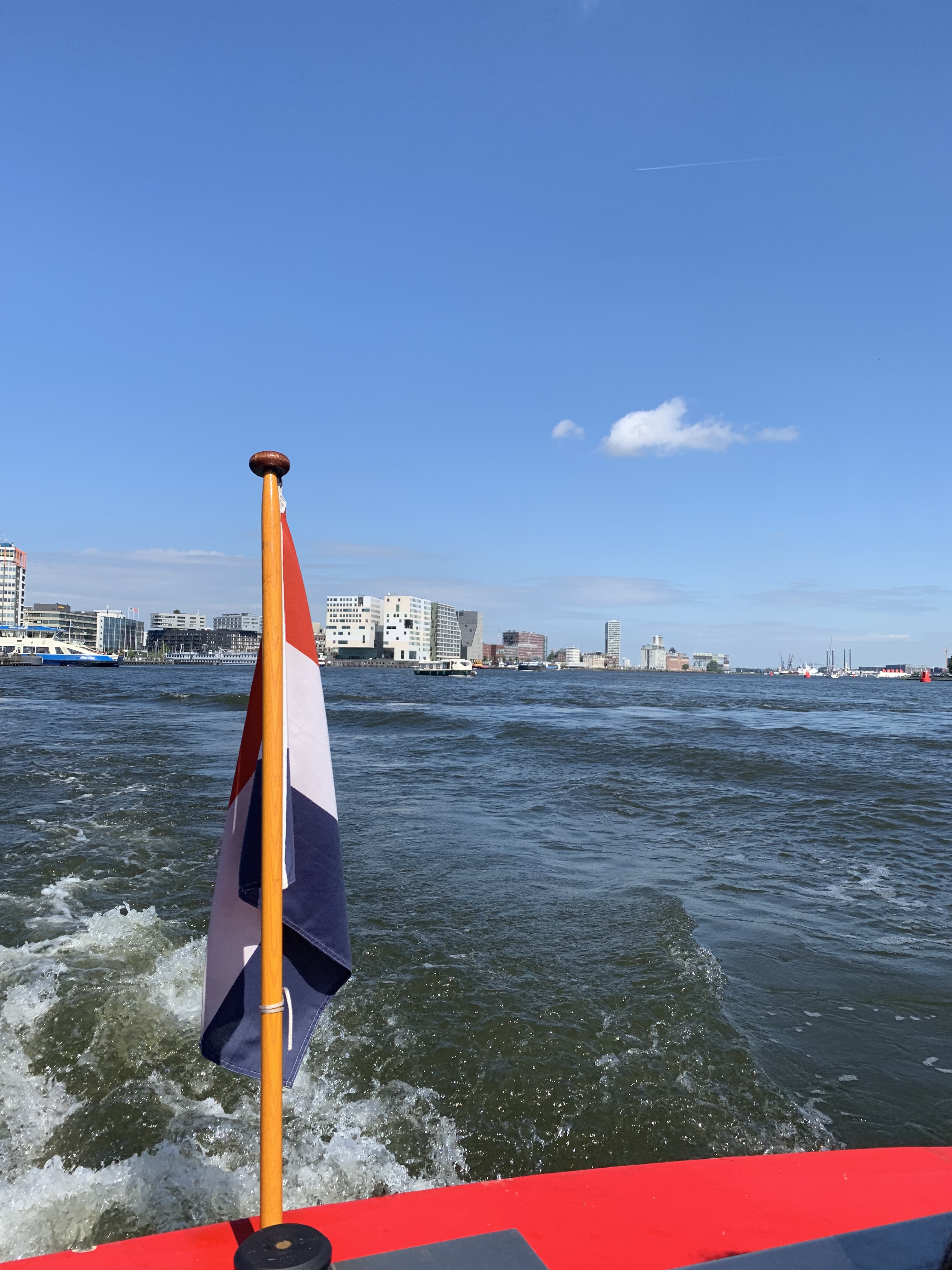
Despite the many boats on the canal, Amsterdam is known for having clean water because it regulates the flow to and from each body of water surrounding the canals. The old water is habitually flushed out into the North Sea, and fresh water filters in from the IJ (pronounced “A”). The IJ is a body of water, formally a bay, in the Dutch province of North Holland, and known for being Amsterdam’s waterfront. Fun Fact! In the 16th and 17th centuries, because water was too contaminated to drink, beer was considered to be the healthier drink than water. Due to the meticulous nature of the water systems, the Netherlands is considered to be the most prepared country in the world for future flood, fires, and plagues.
In addition to the rich history and beautiful housing, the city has one of the largest tourist attractions, and greatest flower markets. This, personally, is one part of Amsterdam I am looking forward to! We are so lucky to be able to live in a city with meaning behind each building, and nature flowing through the lives. I can’t wait for the rest of the week of exploring all the pockets of Amsterdam we learned about on the boat tour.
- Dana Henderson

 Public Health Abroad!