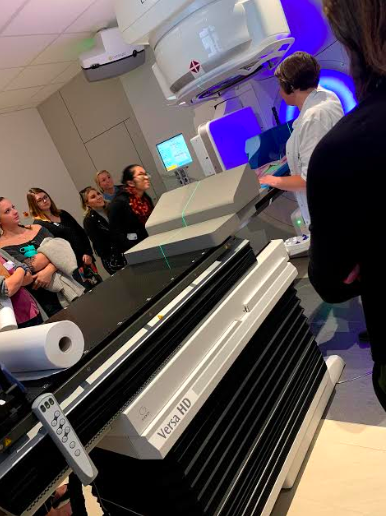
OLV Radiation Oncology Department

6 June 2019 / Aalst, Belgium

In the charming and quaint town of Aalst, lies a grand institute where state of the art medicine is practiced. From the outside, the OLV hospital looks like anything but a hospital; rather, a grand museum. Inside, we met Dr. Roelstraete, who is the head radiation oncologist at the Radiotherapy-Oncology Division of the hospital, specifically, the Borstkliniek (breast unit).

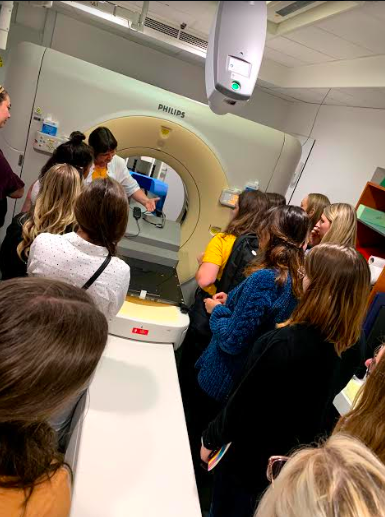
My initial reaction to this incredible institution is how modern the facilities are and how most of the technology is top of the line. For example, the 2.5-million-euro radiation machine, which is designed to pinpoint specific tissues to administer radiation, was mind-blowing. I had never seen one of these machines before and it was astounding to see a device that can save millions of lives without severely invasive procedures from cancerous and benign tumors.

Back in the United States, I volunteer at Arizona Oncology Foundation which also focuses on the quality of life of cancer patients beyond their cancer diagnosis and treatment. Unlike the breast unit in Belgium, this foundation has patients who are diagnosed with any type of cancer. A lot of other services like massages and reflexology at the foundation I work at are not covered by the government’s budget but, rather private donations and out-of-pocket purchases made by the patients. This goes to show the significance difference in the health insurance policies between the United States and Belgium.

Dr. Roelstraete also explained the importance of performing reconstructive breast surgeries immediately after a mastectomy is done. This helps reduce significant scarring to the chest area and can improve quality of life and self-image. What I found interesting is that in the United States, often times women are talked out of getting reconstructive surgery done. This mentality sometimes exists that it does not matter what the female body may look like; she is still beautiful with or without breasts. This differing ideology between these two countries is very interesting and one of the most memorable aspects of the visit today.

  • Melanie Rubio

Jerko Bozekovic

5 June 2019

Motivational Speaker/ TV Personality/Up With People Alumni

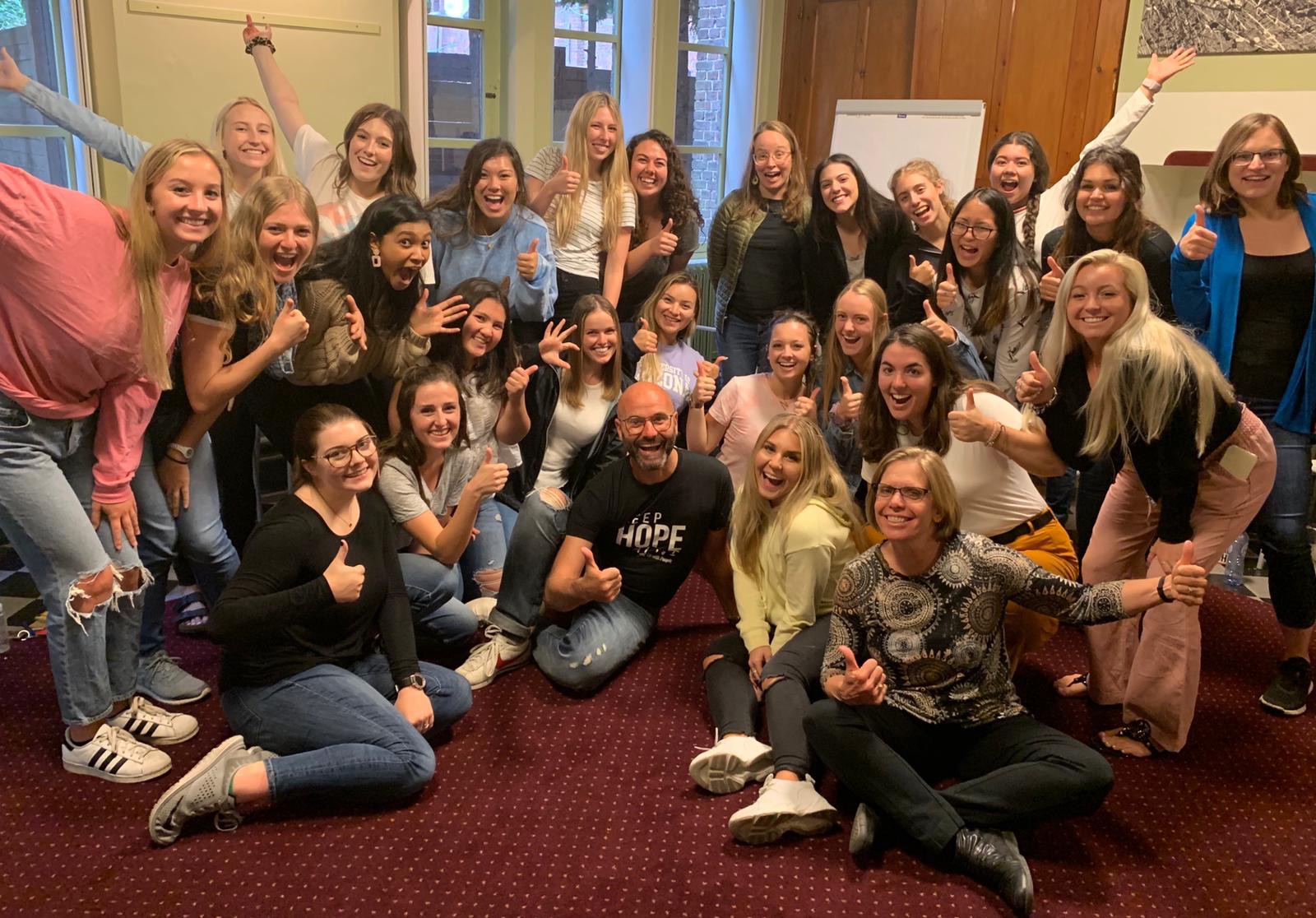
Let’s take a look at our guest speaker from today in Ghent, Belgium. The international superstar motivational speaker, Jerko Bozikovic! You may know him from his outstanding motivational speeches from all over Europe, or his guest appearance in Queer Eye: Belgium. Jerko was here today to help us think about who we are and what our purpose in life is.

Jerko shared his life story and told us all about his adventures leading up to the amazing human he is today. Jerko identifies as gay within the LGBTQ+ community. When he was young, he always wondered who he was or who he identified as. As he became older, Jerko started dancing in musicals and broadways which lead to him meeting more people within the LGBTQ+ community. However, as he continued thinking, “who am I?” and “what will happen after this?” This led to the start of personal development classes. These classes showed him the importance of self awareness and realization. Jerko soon after found himself becoming a personal life coach and trainer within cooperate centers where he began the phrase “why not?” Each time Jerko would find himself in an internal conflict, he would reply to himself “Why not?” This helped him become the happy go lucky person he is today.

Now, Jerko travels the whole world giving speeches to people about self realization and awareness! He also stresses the facts about homosexual relations and activities in other countries. Jerko is very open with the events that have happened in his life, and now lives happily with the little things in life. He reminds us all to stay grateful and humble.

  • Andrea Joshi

Walking tour of Gent, Belgium

5 June 2019

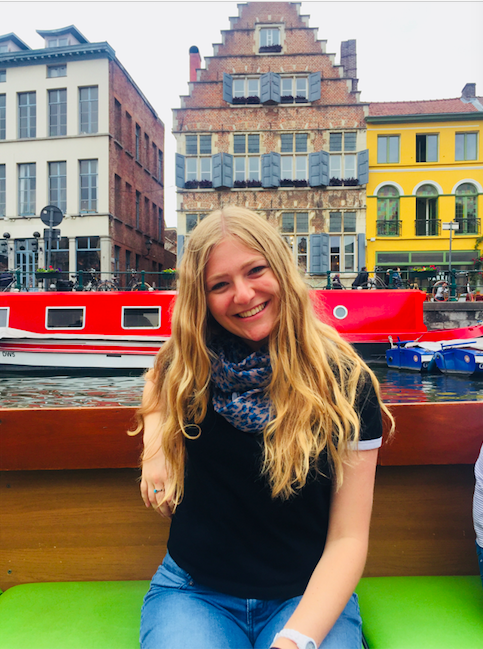
Our first day exploring Ghent was jam-packed and nonstop. We first started with a walking tour of Ghent. Ghent is a city in the Flemish Region of Belgium that has a history as far back as the Stone Age and Iron Age. It is the capital and largest city of the East Flanders provinces. The walking tour of Ghent was the best way to understand the layout of the city. We started our walk through the main square with the Church of Saint Nicholas and then proceeded over the St. Nicholas bridge to the City Hall. We found out that all marriages in Belgium must be done at city hall in order to be recognized. We even saw two brides taking pictures on the city hall steps. With the help of our amazing local tour guide, we were able to obtain an authentic Ghent experience and find the best stops for chocolate. We also had the amazing experience of a canal boat tour of the city that helped us understand the layout of the city even more. Fun fact: every bridge is named for a specific person or event. One bridge was named “the Bridge of Imperial Pleasure” after Charles V who was known at a young age for seducing many women, sneaking away, and infiltrating the surrounding populations.

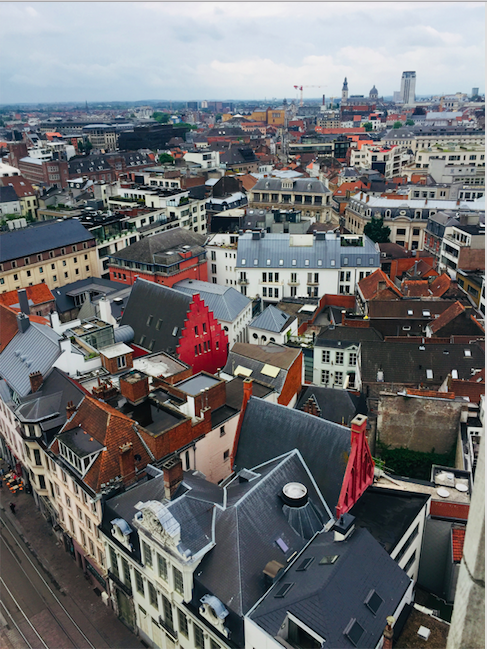
Later adventures in Ghent consisted of lots of lots of stair climbing to the top of the Belfry in the Church of St. Nicholas. To reach the top of the 11th-century Belfry, we had to climb 350 stairs in a very cramped spiral staircase that had people moving in two directions. While the climb was treacherous, it was worth the amazing view of Ghent. We were able to see the old part of Ghent and compare it to the new industrial side of Ghent. It is amazing to think how much time this church has stood for. In fact, the church bell played different beat patterns of music to detect if invaders were approaching the city.

Continuing on our tour, we went next door to the Church of Saint Bravos that had the famous Ghent Altarpiece or also known as the Adoration of the Mystic Lamb. This beautiful art piece that was completed in the 13th century by Jan van Eyck was made on wood and has had been restored many times. However, this piece of art has famously known for how many times pieces of it had been stolen. In fact, two of the panels, “The Just Judges” and “St. John the Baptist” has been stolen, but one piece to this day is still missing.

Lastly, we visited the beautiful Gravensteen Fortress, that stands over and dominates many buildings in Ghent and is known for its torture chambers. It dates to 1180 and was the residence of the Counts of Flanders until 1353. Since then it has been re-purposed as a court, prison, mint, and even as a cotton factory. The fortress was built by Philip of Alsace, who was a count of Flanders from 1143 to 1191. This count was known for being romantic, for being a workaholic, and for his Crusade on the Holy Land of Jerusalem.All in all, today was very educational and ongoing. Today we walked 4 miles, walked about 10,600 steps, and 34 flights of stairs. We will most definitely have a great night of sleep!

  • Natalie Ross